Hidalgo TMS Psychiatric Services · Miami

EN CALMA

Issue One · Fall 2026 · Digital edition

We are opening a
second clinic

Same people. A different way to wait.

On January 2027 we open the LeJeune office. Inside: what TMS is without the white coat, the team who will care for you, and one minute of calm before you go in.

Welcome letter

Thank you for
sitting here

Making that first mental health appointment is hard. Sometimes it takes months. If you are reading this, you have already done the hard part of the day.

We have been caring for Miami families for years. Many arrive after trying two, three, five different medications and still not feeling like themselves. For a good number of them, TMS and advanced treatments were the point where things finally started moving again.

This first issue comes from a simple idea: that waiting should not be empty time, but time in which you understand what we are going to offer you and who will be offering it.

And it brings news we have been waiting to share. On November 1 we open a second clinic on the LeJeune corridor. Nothing is closing: we are adding a place designed entirely around calm.

Yalile Cabrera

PMHNP-BC · Hidalgo TMS Psychiatric Services

January, 2027 · Second location

The new house

860 NW 42 Ave, Suite 304. The LeJeune corridor, a step away from Coral Gables.

Our third office, and the first one designed entirely around an almost naive question: why does a psychiatric office have to look like a psychiatric office? Hard chairs against the wall, white ceiling light, a television nobody is watching.

Many of our patients arrive with their nervous system already on edge. Making the waiting room a pleasant place is not decoration: it is the first part of the treatment, the part that begins before anyone calls your name.

Both offices on SW 137th Ave continue exactly as they are, with the same team. LeJeune replaces nothing. It adds.

The new house · the details

Nine small decisions

01

Walking in

Nobody says your diagnosis out loud. Only your name.

02

The light

Dimmable in every room. No white fluorescents.

03

The sound

Soundproofed TMS rooms. In the waiting area, quiet.

04

The chairs

Reclining and individual, with real space between them.

05

The blanket

Always available. In recovery, almost everyone asks for one.

06

The slippers

Yours to take home. A patient’s idea.

07

Tea and coffee

Always on, with caffeine-free options.

08

The recovery area

Its own space, away from the foot traffic.

09

The parking

Covered, inside the building.

«Care works better when the room itself is calm. It is not an extra: it is half the work.»

Everything we do

TMS is one door.
There is more than one

SPRAVATO® · nasal esketamine

FDA-approved for treatment-resistant depression. Administered in clinic with post-dose observation. REMS-certified center.

IV Ketamine

Physician-supervised infusions, with a personalized protocol and a dedicated recovery room.

Psychiatry and psychotherapy

Consultation, medication management and therapy. The foundation everything else rests on.

Children and adolescents

A dedicated child and adolescent mental health service, with age-appropriate psychotherapy.

Pharmacogenetic testing

Helps us understand how your body metabolizes certain medications. Useful when several antidepressants have failed.

Pre-bariatric evaluation

Psychiatric clearance before weight-loss surgery, with the report the surgical team requires.

All of these require a prescription and an individual medical evaluation.

The team

Five people,
not a directory

In mental health, who you talk to matters as much as what you are offered.

Dr. Alen Hidalgo, MD

Board-certified psychiatrist

Dr. Alen Hidalgo, MD

Trained at Universidad Iberoamericana in the Dominican Republic. He is an assistant professor at Citrus Health Network and Florida International University, where he supervises psychiatry residents. He treats depression, anxiety, OCD, mood disorders, schizophrenia and ADHD. He sees patients in Spanish, English and Italian.
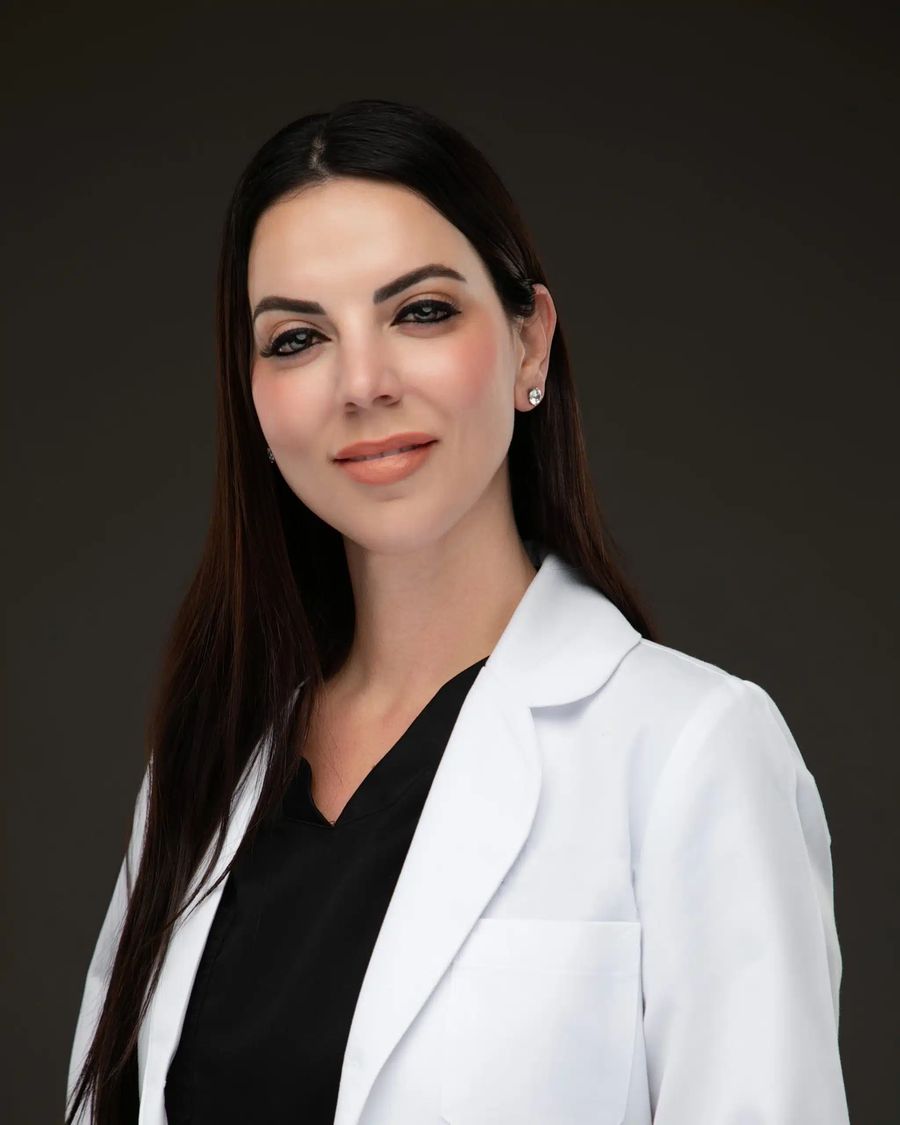
Yalile Cabrera

Psychiatric nurse practitioner · PMHNP-BC

Yalile Cabrera

Board-certified psychiatric mental health nurse practitioner. She runs the clinical day-to-day at Hidalgo TMS. For most patients she is the first familiar face here: the one who explains the treatment before it begins and who keeps track of how each week is going.
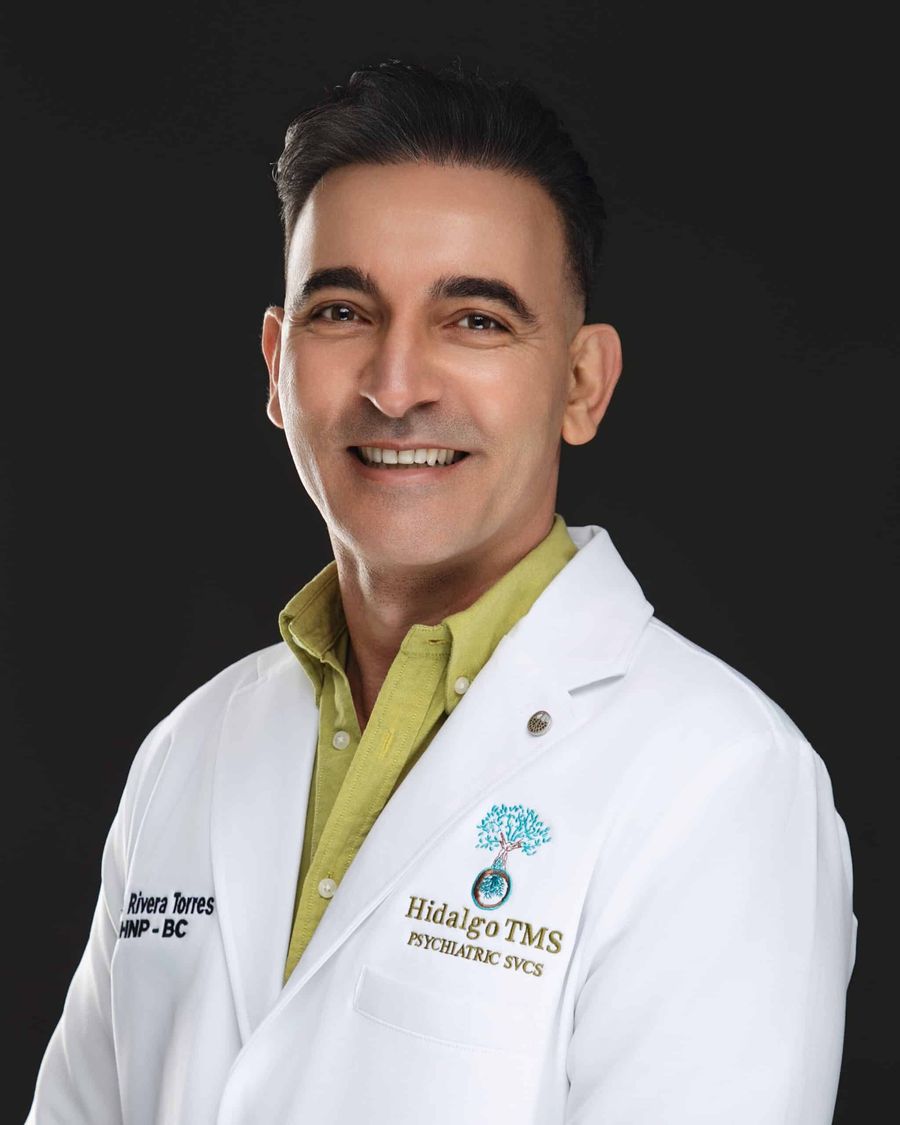
Gabriel Rivera

Psychiatric nurse practitioner · PMHNP-BC

Gabriel Rivera

Board-certified psychiatric mental health nurse practitioner. Dedicated to children and adolescents: play-based psychotherapy and behavioral health, a field where both the pace and the language have to be different.
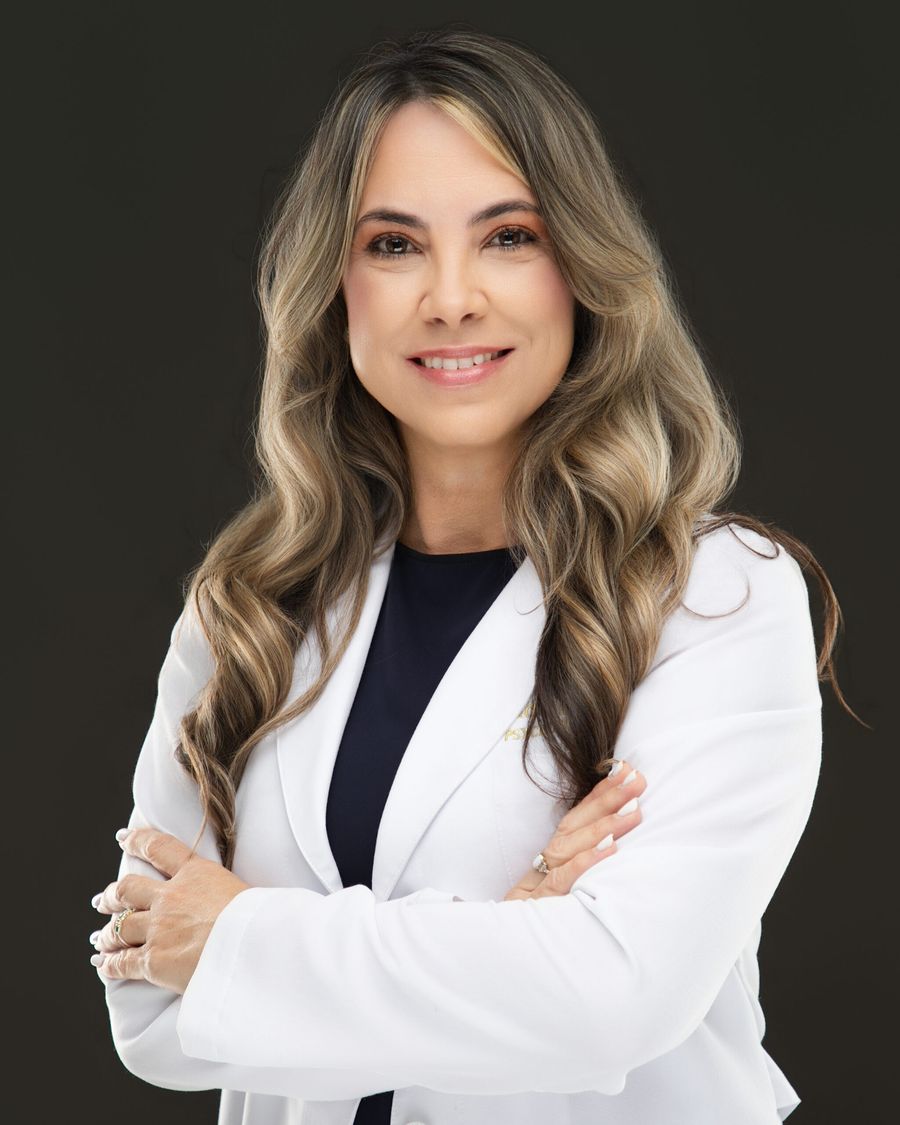
Mairelis Castro

Psychotherapy · LMHC

Mairelis Castro

Licensed mental health counselor. She supports the therapeutic work that holds the treatments together and helps build lasting tools.
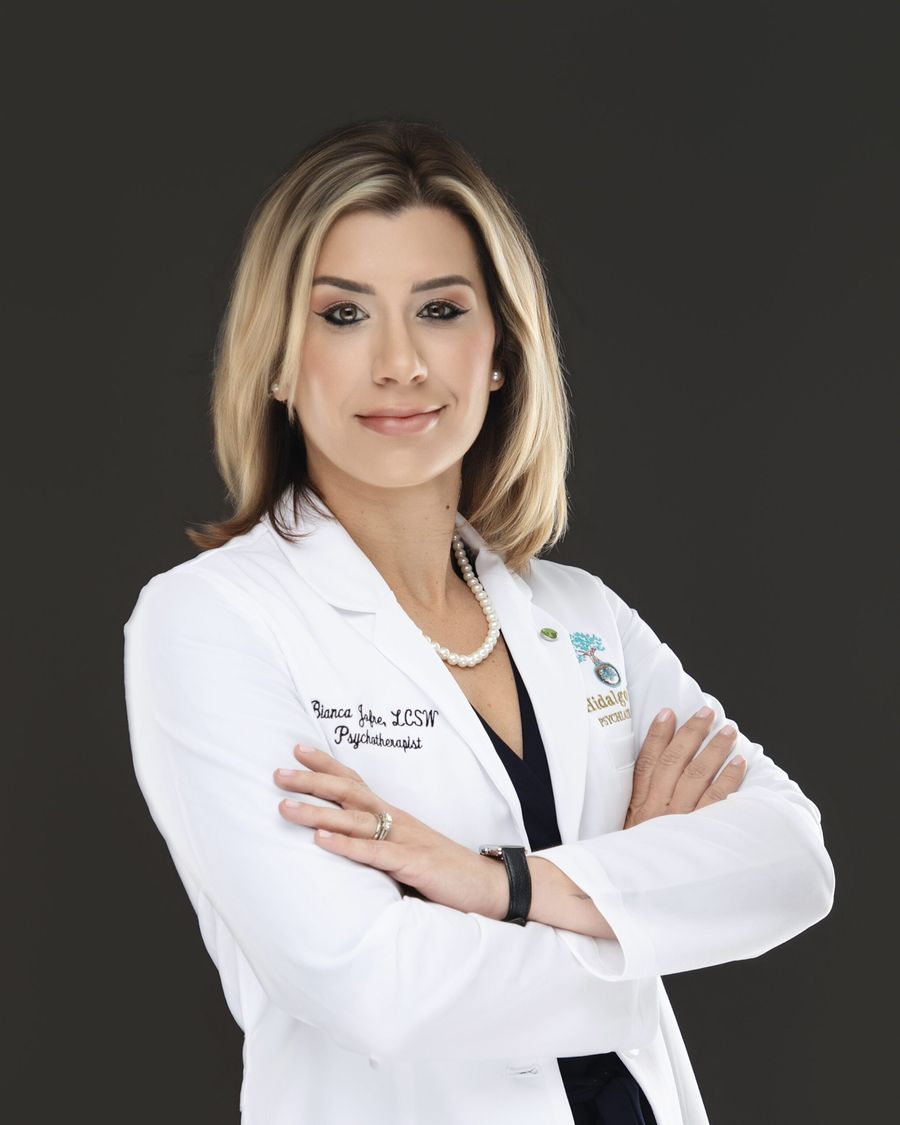
Bianca Jofre

Psychotherapy · LCSW

Bianca Jofre

Clinical social worker. Anxiety, grief and trauma in adults, bridging the office and what happens at home.

The plan is yours, not the protocol’s

No treatment here is applied off the shelf. First comes a full evaluation: what has already been tried, what half worked, which side effects were intolerable.

Languages

Spanish · English · Italian

Ages

Children, adolescents and adults

Hours

Monday to Friday, 8:30 am – 5:30 pm

Phone

+1 (305) 459-3207

Explained slowly

What TMS is

Told the way we tell it to a new patient.

TMS stands for transcranial magnetic stimulation. It is FDA-approved for treatment-resistant depression and also for OCD.

You sit in a chair, awake, fully dressed, with no sedation. A coil rests against your head and delivers magnetic pulses — the same family as those in an MRI — to a region of the cortex that tends to be underactive in depression.

Nothing enters your body. There is no anesthesia and no surgery. When it ends you stand up and leave: you can drive, go back to work, pick up your kids.

What you feel is a rhythmic tapping and a clicking sound. The first sessions are mildly uncomfortable for some people; almost everyone adjusts within the first week.

You walk out of the session and carry on with your day. For many people, that alone changes everything.

What people ask first

Does it hurt?

No. It can feel uncomfortable at first. The intensity is adjusted.

Will it leave me groggy?

No. You leave as you arrived, without the systemic effects of medication.

How long does it take?

From a few minutes to a little over half an hour, in courses of several weeks.

Do I stop my medication?

Not necessarily. Many patients stay on it. That is the physician’s call.

See the TMS page

What has changed

This is not the TMS
of ten years ago

Shorter sessions

Theta burst

Classic protocols took up half a morning. Theta burst patterns allow far shorter sessions with comparable results.

More precision

Individual targeting

The area stimulated is no longer calculated the same way for everyone: it is matched to each person’s anatomy.

More indications

Beyond depression

OCD now has an approved indication. There is active work in anxiety, PTSD, chronic pain and addiction.

Better coverage

Insurance covers it

Florida’s major insurers cover it when the clinical criteria are met. We handle the paperwork.

«The first thing that comes back is usually not joy. It is being able to feel bored without dread.»

The practical part

Insurance and first steps

In network

Florida Blue

Aetna

Cigna

UnitedHealthcare

Optum

Magellan Health

Medicare

Oscar Health

If yours is not listed, ask us anyway: the list changes. We handle prior authorization for you.

How it starts

I

You book

Reception verifies your coverage before the first visit.

II

Full evaluation

A long consultation: your history, what worked and what did not. No rush.

III

Plan and authorization

The treatment is decided and we handle the process with your insurer.

IV

You start, and it adjusts

The plan is not fixed. It is reviewed according to your response, week by week.

While you wait

One minute,
four counts

If you arrived with your pulse racing, this is the simplest thing you can do right now, seated, without anyone noticing.

4

Breathe in through your nose for a count of four

4

Hold it, without straining, for another four

6

Release through your mouth, slowly, for six

×6

Repeat six times. That is exactly one minute

The key is that the out-breath is longer than the in-breath: that is what tells your body it can lower its alert level.

If today is genuinely bad

Tell the person at the front desk before you leave, or call 988, the suicide and crisis lifeline, 24 hours, in English and Spanish. In a medical emergency, call 911.

Before you go

Five stars,
two hundred and eighty times

More than 300 Google reviews averaging 5.0. We did not write them: patients did, most of them from our own waiting room.

Read the reviews

★★★★★
5,0

Follow us

Shall we take the first step?

Request an appointment here and we will call you. Or call us directly, Monday to Friday, 8:30 am to 5:30 pm.

Breathe. You are here.

Capote Business Solutions

Magazine design and production

Capote Business Solutions

Issue 1 · Fall 2026 · Digital edition. Educational content: not a substitute for a clinical consultation.

x

Contact us if you have any questions or concerns, if you are looking to make an appointment please request an appointment. 

Contact Us!

Opening Hours: Mon – Frid: 8.30am – 05.30pm
Saturday – Sunday: Closed

Call Support: +1 (305) 459-3207